Short answer
The answer in plain English
A list of AI tools proves familiarity with product names, not the ability to improve work. Recruiters need evidence of the bottleneck you found, the workflow you changed, the decisions you kept human, the checks you used, and the result you can defend. A concise accomplishment story demonstrates transferable judgment even after today's tools change.
Why it matters
What to understand
AI literacy is becoming common, so simply naming ChatGPT, Claude, Copilot, or Gemini does little to distinguish a candidate. Stronger resume evidence describes a real process: the original constraint, what the tool handled, where the applicant supervised or escalated, how output was verified, and what measurably improved. When reliable numbers do not exist, scale, repeatability, team use, and clear controls are still useful evidence.
Visual guide
How the pieces fit together


Tool names are not proof
“ChatGPT, Claude, Copilot, Gemini” looks current in a skills section, but it leaves the recruiter with the important questions unanswered. What work was slow? What changed? Which decisions stayed with you? How did you catch mistakes? What became better?
Naming software demonstrates exposure. It does not demonstrate judgment. A chef would not be hired because a resume lists ovens and knives; the evidence is whether the chef redesigned preparation, maintained quality, reduced waste, or served customers faster. AI should be presented the same way.
This matters more as AI literacy becomes common. LinkedIn has identified AI literacy among fast-growing skills, while its broader lists and the World Economic Forum’s skills outlook also emphasize adaptability, analytical thinking, and other human capabilities. Employers do not merely need someone who can open a model. They need someone who can improve work without introducing unacceptable error, privacy risk, or confusion.
Use a five-part proof story
A credible AI accomplishment has five parts:
- the bottleneck;
- the revised workflow;
- the human decisions;
- the quality controls; and
- the verified outcome.
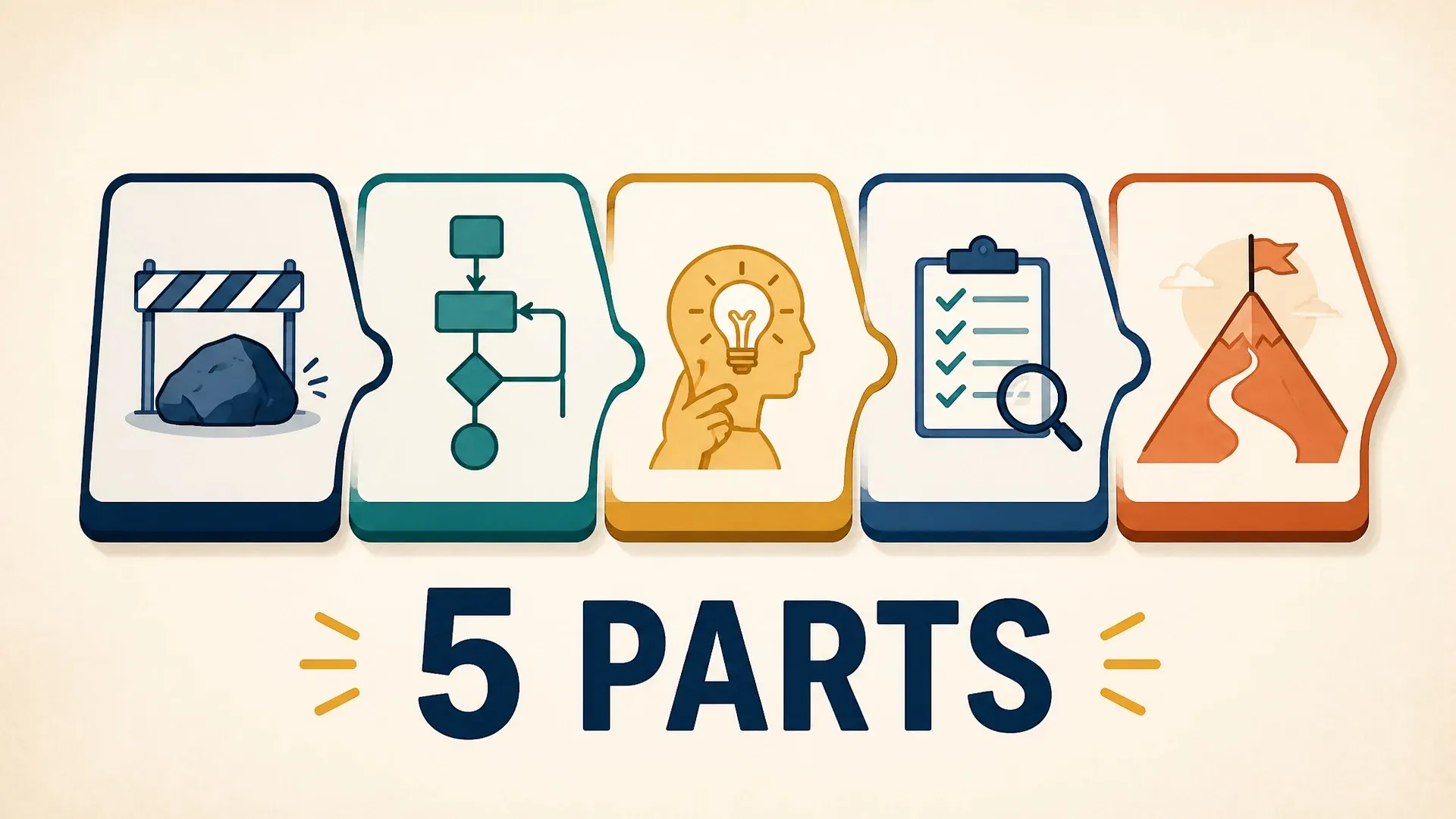
A useful AI accomplishment tells the whole operational story, not merely which application produced a first draft.
These parts turn a vague claim into a small case study. They also transfer across tools. The product named in a resume may change next year; the ability to diagnose a constraint, design a controlled process, and own the output remains useful.
Start with the bottleneck
“Writing took too long” is too broad. “The team spent four hours every Friday converting webinar transcripts into channel-specific drafts” identifies the task, frequency, and cost.
Other bottlenecks might be support agents reading hundreds of repetitive comments, a coordinator turning meeting notes into actions, or an analyst cleaning inconsistent descriptions before categorizing expenses. The detail tells a recruiter that you understood the operation before adding technology.
Employers pay people to remove constraints, not to collect apps. The bottleneck is therefore the beginning of the bullet, even when the AI tool appears later.
Explain what the AI handled—and what it did not
“Used ChatGPT to create marketing content” hides the process. A stronger version could say:
Created an AI-assisted repurposing workflow that turned approved webinar transcripts into first drafts for email, social, and sales follow-up; selected source claims, adapted each draft, and checked statistics against the original before publication.
Now the handoffs are visible. The model produced a first pass. The employee selected approved material, made channel-specific communication decisions, and verified claims.
Human decision points are often the most valuable evidence. In customer support, a system might group requests and draft common replies. A person still decides whether a response fits policy, whether frustration requires escalation, and whether the question involves money, law, privacy, or safety. “Automated customer service with AI” can sound reckless unless those boundaries are clear.
Microsoft’s workplace research argues that as AI handles more execution, critical thinking and quality control become more important. A good application makes that supervision concrete rather than implying that every decision was delegated.
Quality control should match the risk
Admitting that AI output needs checking does not weaken an accomplishment. It signals experience. Fluent text can still contain unsupported claims, missing context, incorrect calculations, or private information that should never have entered the system.
A brainstorming note may need a quick relevance check. A public article needs source and brand review. A financial report needs formula testing, reconciliation, and known data ownership. Hiring, healthcare, legal, and personal information demand much tighter controls and may not belong in an unapproved external tool at all.
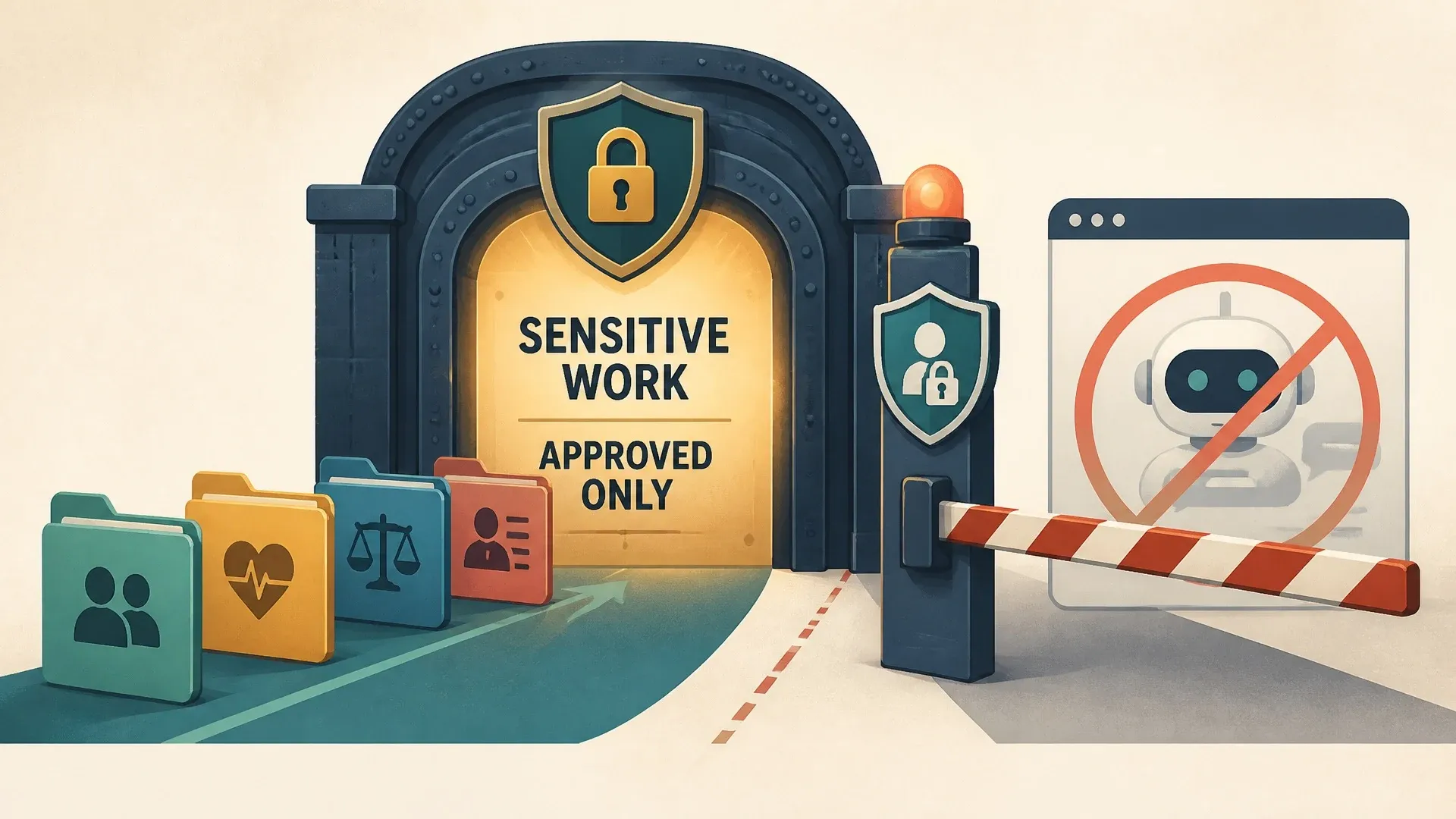
Responsible AI use includes knowing which data and decisions require approved systems, tighter review, or no delegation.
Useful controls include comparing claims with original documents, manually testing a sample, using an approved template, requiring a second reviewer, excluding sensitive inputs, and escalating uncertain cases. Replace “ensured accuracy” with the actual check: “Reviewed each generated summary against the source interview, corrected unsupported claims, and required account-owner approval before delivery.”
Show an outcome you can defend
Time saved is useful, but it is not the only result. Turnaround time, volume, error rates, revision rounds, consistency, completion, or missed handoffs can all matter. Use numbers only when the baseline and comparison are real.
If a process moved from three hours to 90 minutes for comparable work, say so. If five colleagues adopted the template, say that. Do not manufacture a dramatic percentage because it sounds stronger.
Without reliable before-and-after data, show honest scale and repeatability: “Built an AI-assisted meeting follow-up process for a four-person project team, drafting actions and then verifying owners, deadlines, and dependencies before weekly distribution.”
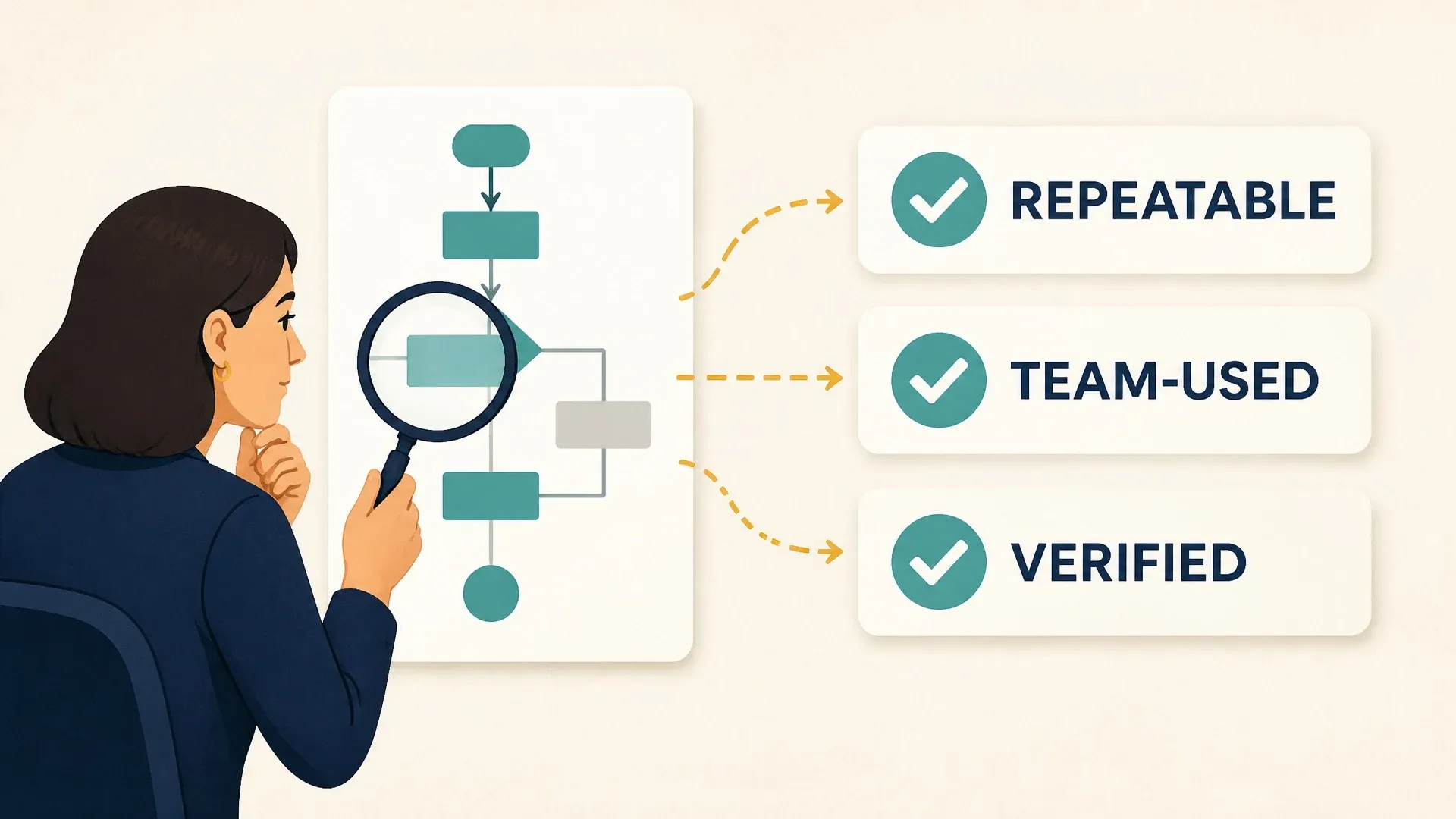
Scale, adoption, and verification can provide honest evidence when a reliable before-and-after metric does not exist.
Reuse the same evidence across your application
On LinkedIn, “AI-savvy project manager” blends into thousands of profiles. “Project manager who builds AI-assisted reporting workflows, uses automation for first-pass organization, and verifies decisions, owners, deadlines, and source data before stakeholder delivery” describes how the person works.
In an interview, expand the same proof story: describe the old process, the structured input, what the model handled, an error or overstatement you caught, and how the recovered time was used. A small portfolio case study can show the workflow visually after confidential names, documents, customer data, and proprietary instructions are removed.
This is also the practical career lesson behind jobs that AI is less likely to replace: value sits in diagnosis, context, trust, coordination, and responsibility, not in a fashionable title or tool list.
Audit every resume line that says “used AI to improve efficiency.” Replace it with one compact story: the constraint, the workflow, the human judgment, the checks, and the defensible result. Tools will change. Evidence that you can produce work others trust will travel with you.

