Short answer
The answer in plain English
A microscopic hatching line in the limb bone of a tiny Liaoningosaurus shows that it died shortly after leaving the egg. Its fast-growing tissues lacked annual growth marks or signs of maturity, while preserved osteoderms show that ankylosaur armor had already begun forming. The evidence identifies a hatchling, not a miniature adult, but does not prove that every ankylosaur species developed armor at the same pace.
Why it matters
What to understand
Liaoningosaurus was once interpreted as either a baby ankylosaur or an exceptionally small adult. Thin sections from two specimens now show rapidly deposited, immature bone and no annual growth marks; one also preserves a neonatal boundary formed around hatching. The fossils reveal that armor appeared very early, although the plates were still thin and growing. Missing adults leave the animal's final shape and proposed aquatic lifestyle unresolved.
Visual guide
How the pieces fit together


The decisive clue was smaller than the fossil
Every known skeleton of Liaoningosaurus paradoxus is tiny. The original specimen measured less than 34 centimeters from nose to tail, and even the largest sampled individual had a thigh bone only 56.5 millimeters long. That made the animal easy to picture as a baby—but size is not an age certificate. Some dinosaur species really were small as adults, and the timing of skeletal fusion varies.
The firmer answer came from inside the bones. Researchers sectioned ribs, limb bones, and a piece of neck armor from two specimens and examined the tissues under a microscope. Neither individual showed annual lines of arrested growth, a dense outer layer associated with growth ending, or extensive internal remodeling. Both died before reaching one year old.
One specimen preserved something more specific: a narrow neonatal boundary in its radius and ulna. Bone laid down inside an egg experiences a different physiological environment from bone deposited after hatching. The transition can leave a hatching line. Its position within rapidly formed, highly vascular tissue indicates that this animal died shortly after emerging from the egg.
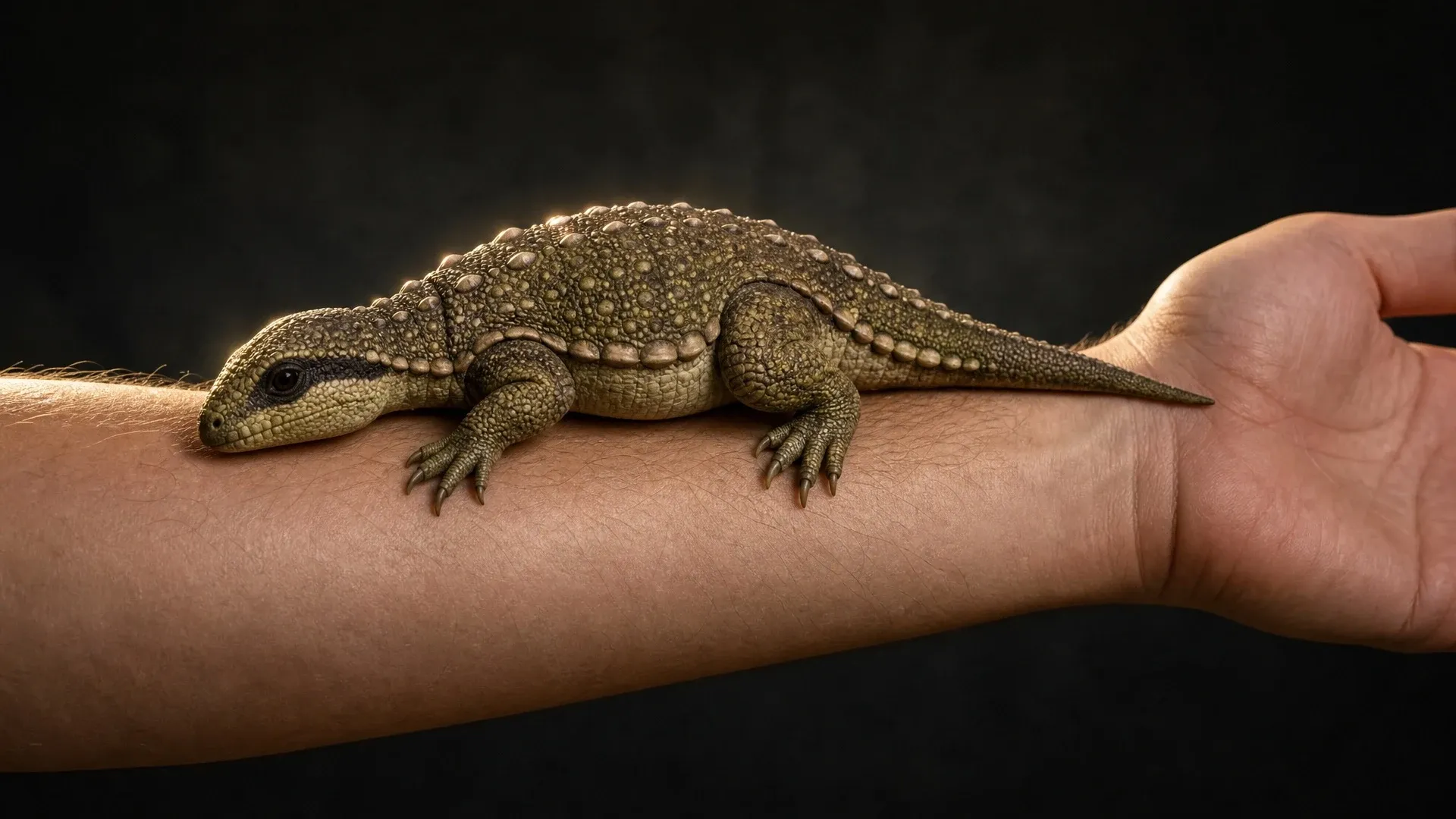
The result makes this specimen the first ankylosaur hatchling confirmed through bone histology. It was not merely small enough to look young; its skeleton recorded the event that separated life inside the egg from life outside it.
Why tiny skeletons caused a large argument
Liaoningosaurus was named in 2001 from the Early Cretaceous Yixian Formation of northeastern China. Unfused vertebrae and juvenile proportions suggested youth from the beginning. Yet additional fossils remained similarly small, and no obvious adult appeared. That absence opened the possibility that the known body form was close to full size.
The distinction mattered because the animal had unusual feet, claw-like toes, and broad plates associated with the underside of its body. A later specimen was preserved near fish remains. Those observations inspired an arresting reconstruction: a partly aquatic, possibly fish-eating ankylosaur, something like an armored dinosaur built for a lake.
But that interpretation depended heavily on treating juvenile anatomy as adult anatomy. A hatchling’s proportions may change substantially as it grows. Fish and a dinosaur buried together are not automatically predator and stomach contents. The lake sediments that preserve the fossils record where a carcass ended up, not necessarily how the animal lived.
Histology closes one branch of the debate. The fossils were not miniature adults. It does not automatically settle the ecological claims built around them.
What growing bone looks like under a microscope
Bone is remodeled throughout life. Fast-growing tissue tends to contain abundant vascular channels that once carried blood through the expanding skeleton. Periodic slowdowns can leave visible growth marks. Older bone is more likely to show internal rebuilding, while a tightly organized outer layer can indicate that rapid skeletal growth was approaching its end.
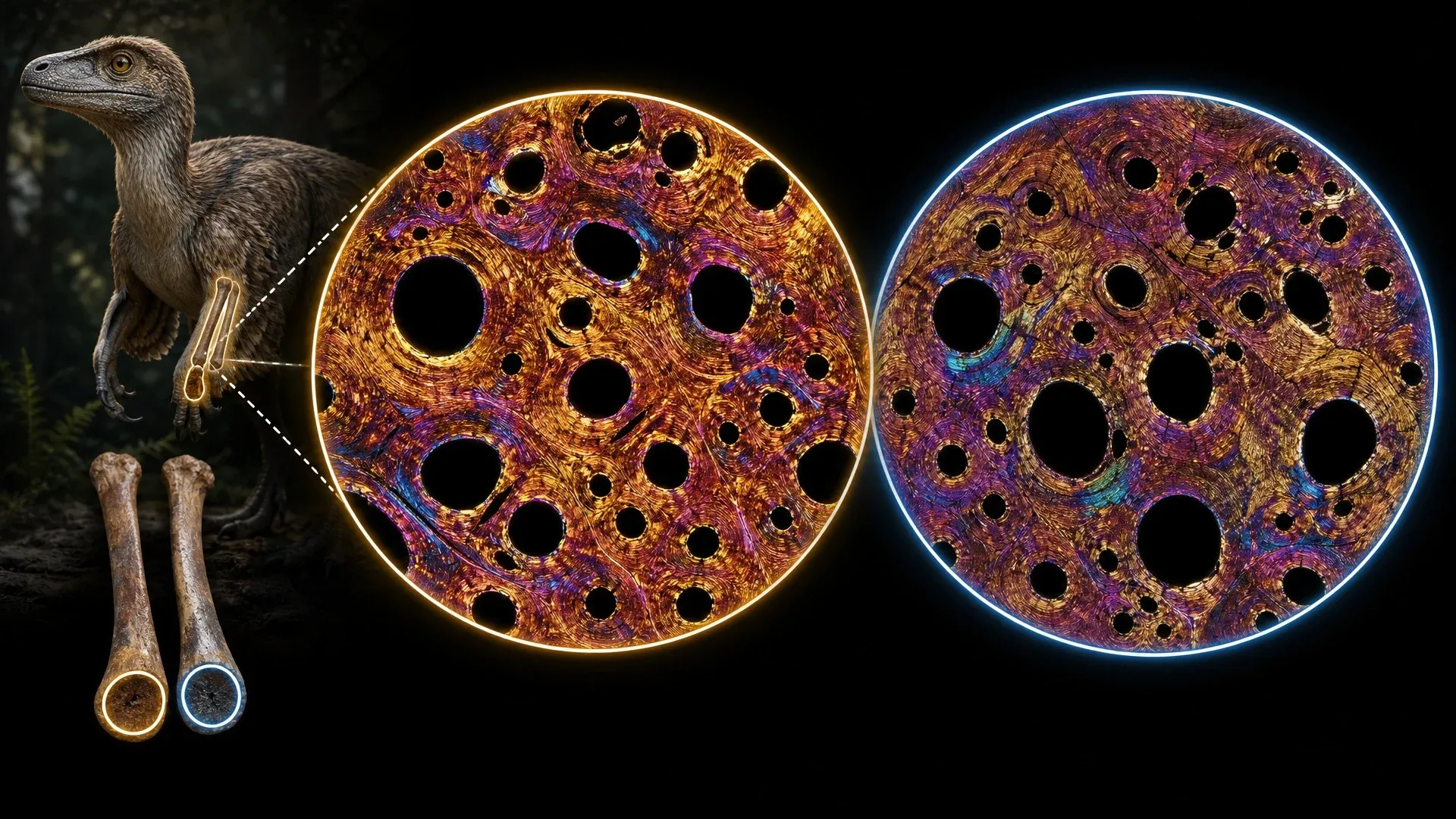
The two Liaoningosaurus specimens retained immature tissue without completed yearly cycles. The smaller animal’s hatching line sharpened that broad age estimate into a life-stage diagnosis. It also illustrates why paleontologists combine clues. One loose joint can be ambiguous; an entire pattern of fast deposition, absent maturity markers, minimal remodeling, and a neonatal boundary is much harder to explain as adulthood.
The method is still not a perfect clock. Different bones can mature at different rates, and expanding marrow cavities can erase early tissue. In fact, the study found small differences in developmental state among bones from the same animal. Histology works best as a set of converging records rather than a literal count of flawless tree rings.
Armor started early, but it was not finished
Ankylosaur armor consisted largely of osteoderms—bones that developed within the skin. Mature species could carry rows of plates, nodules, neck bands, spikes, and, in some later ankylosaurids, a specialized tail club. A hatchling should not be imagined as a pocket-sized adult fortress.
Yet the small Liaoningosaurus skeletons already preserve osteoderms. Plates occur around the shoulder, and one specimen includes unusual armor beneath the body. The larger juvenile also preserved part of a cervical half-ring, a connected band positioned across the neck. When sectioned, that element showed a thin compact exterior surrounding porous internal bone.
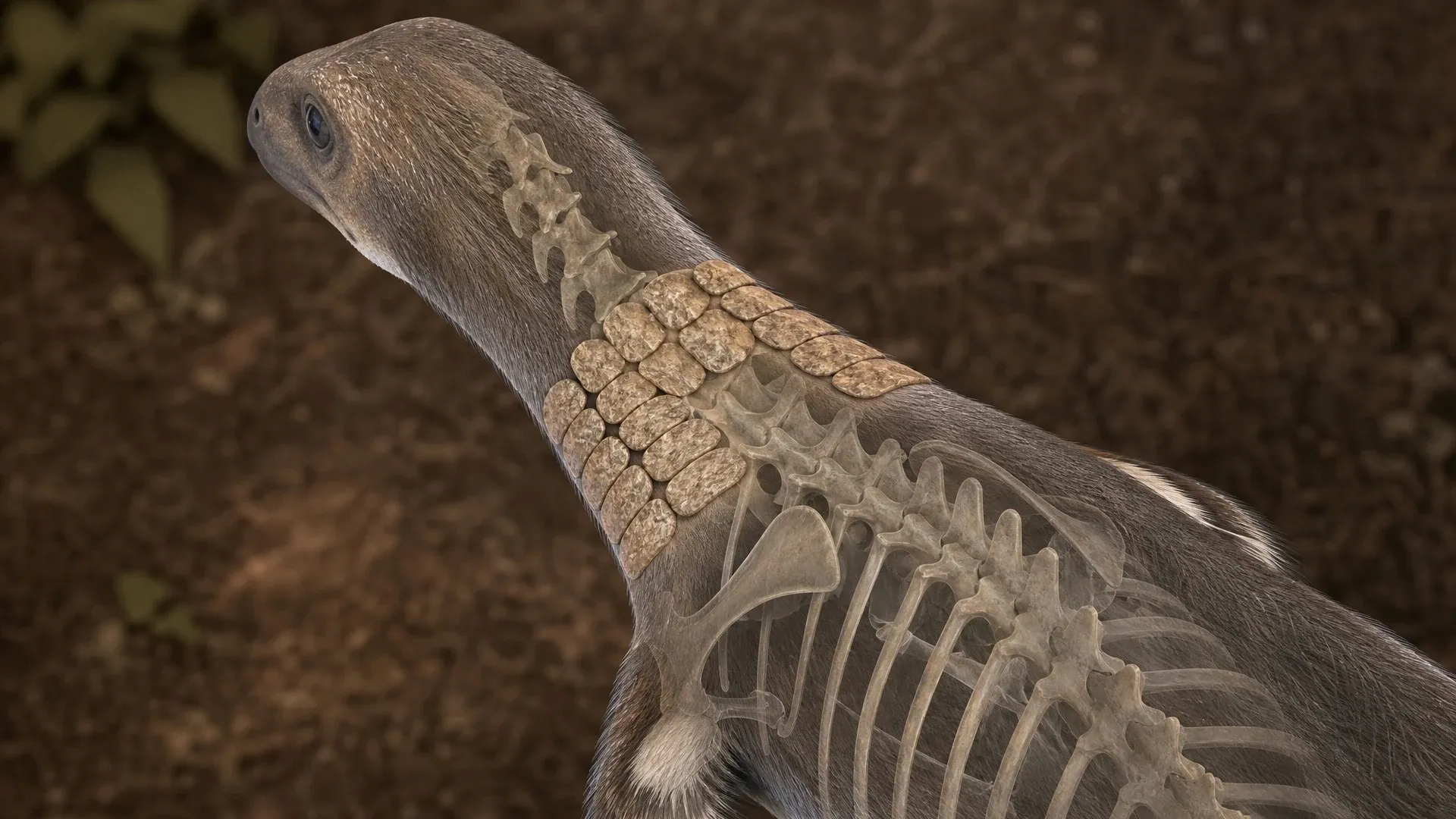
That structure matters in two ways. First, it confirms that the element was real bony armor rather than simply hardened skin. Second, its thin, cancellous construction fits a structure still undergoing development. Defense had begun, but the plates still had growing to do.
The hatching line and the armor section come from different individuals. Together with the visible osteoderms on the smallest skeletons, they show that armor formation began near the start of life in this lineage. They do not reveal exactly how protective those early plates were or how their shapes changed on the way to adulthood.
What one hatchling cannot tell us
Young fossils assigned to other ankylosaurs sometimes preserve little or no armor. That could mean different lineages developed osteoderms at different times. It could also reflect preservation: small plates may detach, mineralize weakly, or disappear before burial. Liaoningosaurus demonstrates an early start for at least one lineage, not a universal schedule for every armored dinosaur.
The largest missing piece is still the adult. Without one, researchers cannot trace which juvenile proportions persisted, how the belly armor changed, or whether mature animals resembled any of the dramatic reconstructions proposed from babies. An adult might look different enough that an existing fossil has not yet been recognized as the same genus.
For now, the strongest conclusion is precise and limited. Liaoningosaurus was a rapidly growing hatchling or very young juvenile. Its skeleton already carried organized osteoderms. The discovery does not give us a finished armored dinosaur in miniature; it captures the construction process almost as it began.


