Short answer
The answer in plain English
In a custodial wallet, a company controls the private keys and maintains the customer's balance in its own records; the customer asks the company to make withdrawals. In self-custody, the user controls the signing authority and can transact without the custodian. That removes one counterparty but makes backup, phishing, transaction review, and irreversible mistakes the user's responsibility.
Why it matters
What to understand
Crypto remains recorded on a blockchain while wallets manage the keys that authorize changes. Exchanges can pool customer assets and update internal balances without an on-chain transaction. Self-custody transfers assets to an address controlled by the user's keys, but a stolen recovery phrase or approved malicious transaction can be final. Hot versus cold describes key exposure; custodial versus self-custody describes who controls the keys.
Visual guide
How the pieces fit together


A wallet holds authority, not a pile of coins
Bitcoin remains recorded on the Bitcoin blockchain. Ether remains in Ethereum’s shared state. A wallet manages the information needed to authorize changes to those records.
A public address can receive assets and be inspected by anyone. Spending requires a valid cryptographic signature. The private key creates that signature without being revealed to the network. Whoever controls the signing process has the practical power to move the assets.
Custody is therefore not mainly an interface choice. It decides who can sign, who can block a withdrawal, and which failure you must survive.
Custodians keep the keys and a separate ledger
When an exchange displays half a bitcoin in a customer account, it may not maintain one blockchain address containing exactly that amount for that person. Platforms often pool assets in shared wallets and assign balances in an internal database.
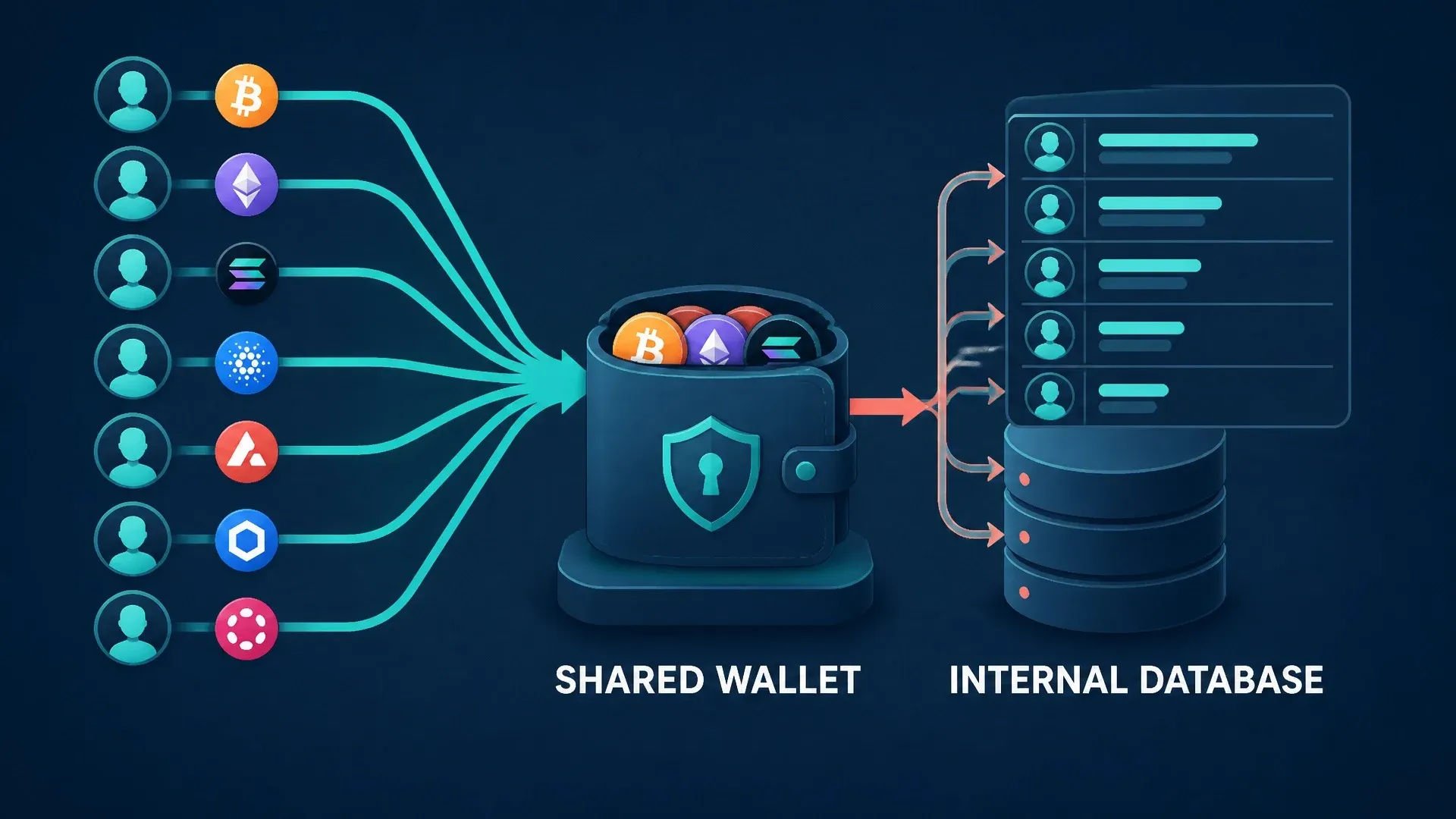
A custodial platform may pool assets on-chain while assigning individual customer balances in its own ledger.
Transfers between two customers of the same exchange can be database entries without a Bitcoin transaction. This is fast and cheap. The distinction appears during withdrawal.
A customer submits an address and amount, completes authentication, and asks the exchange to send the asset. The customer has not signed the blockchain transaction. The platform checks the account, limits, compliance rules, and available assets. If it approves, the exchange uses its keys to sign and broadcast the transaction.
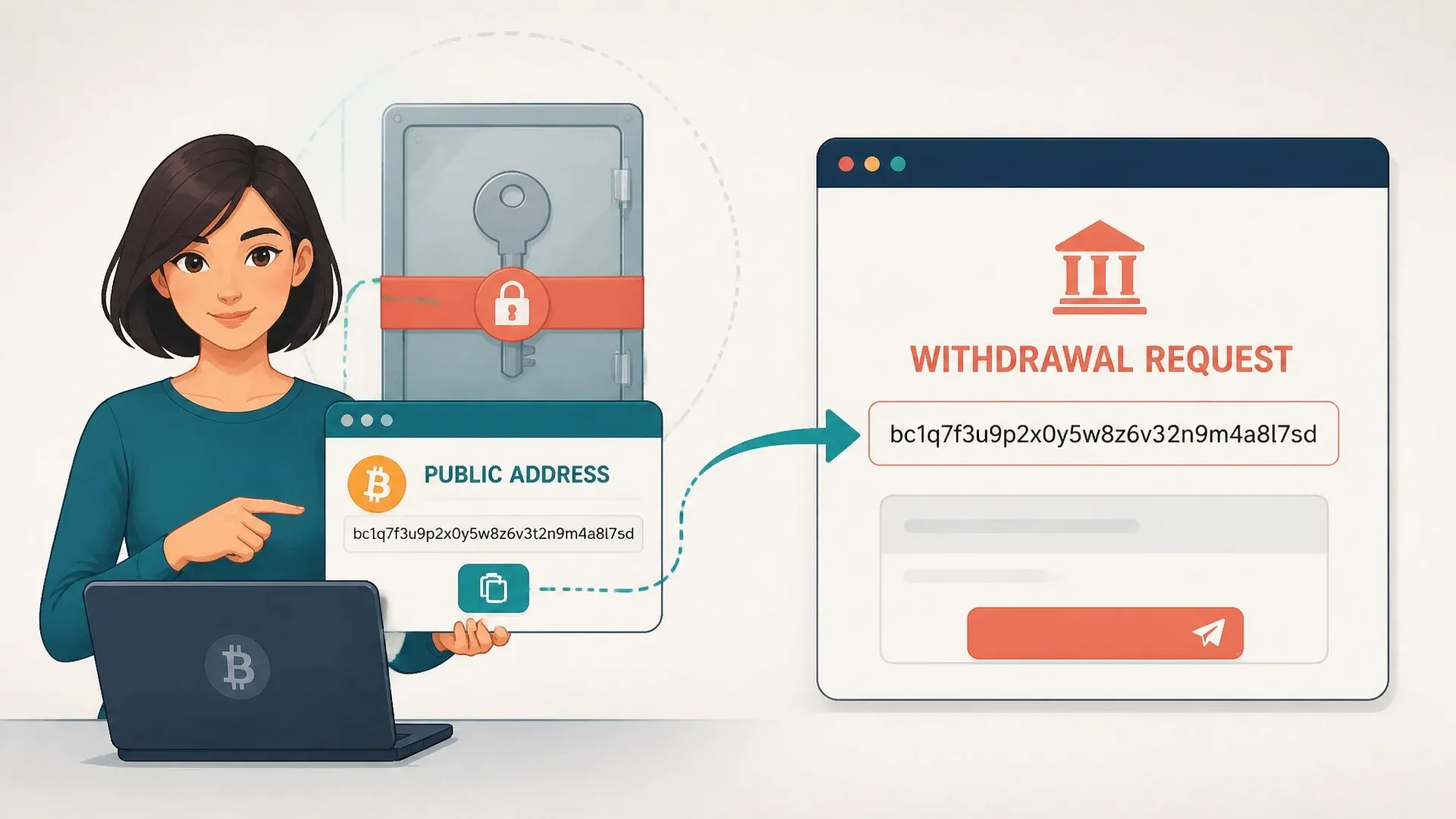
A withdrawal moves assets to an address; control changes only when the destination’s signing keys belong to the user.
This arrangement can provide professional security operations, fraud monitoring, and familiar account recovery. It also creates a central failure point. The company can delay withdrawals, suffer a hack, become insolvent, face legal restrictions, or have poor internal records. A number on the screen does not prove that every customer can withdraw simultaneously.
Crypto assets held through a platform are not automatically equivalent to deposits in an FDIC-insured bank. The FDIC’s deposit-insurance explanation applies to eligible deposits at insured institutions under defined limits and rules, not to crypto merely because a company offers an account.
Self-custody changes both power and responsibility
A self-custody wallet generates or manages keys controlled by the user. After an exchange sends assets to that wallet’s address, the exchange no longer has the signing authority required to move them.
When the user makes a payment, the wallet constructs a proposed transaction and shows the address, amount, and fee. Approval causes the key to sign. A hardware wallet can keep the private key inside the device while returning only the signature. The network verifies it and updates the shared ledger without a company’s permission.
That independence removes account freezes and custodian solvency from the signing path. It does not create an undo button. The network generally cannot distinguish a legitimate owner from a thief who obtained valid keys.
A recovery phrase is especially sensitive because it can recreate signing authority in another compatible wallet. It is not a password-reset code that support can cancel. Typing it into a fake site can hand complete control to an attacker. Losing every valid copy can leave visible assets permanently inaccessible.
Transaction review becomes equally important. An incorrect address, wrong network, or malicious smart-contract approval can be final. A hardware device can prevent malware from extracting a key while still signing a harmful instruction the owner explicitly approves.
Hot, cold, custodial, and self-custodial are separate axes
A hot wallet uses keys in an internet-connected environment, which is convenient for frequent activity but exposed to compromised devices and phishing. A cold setup keeps key material away from ordinary internet-connected use.
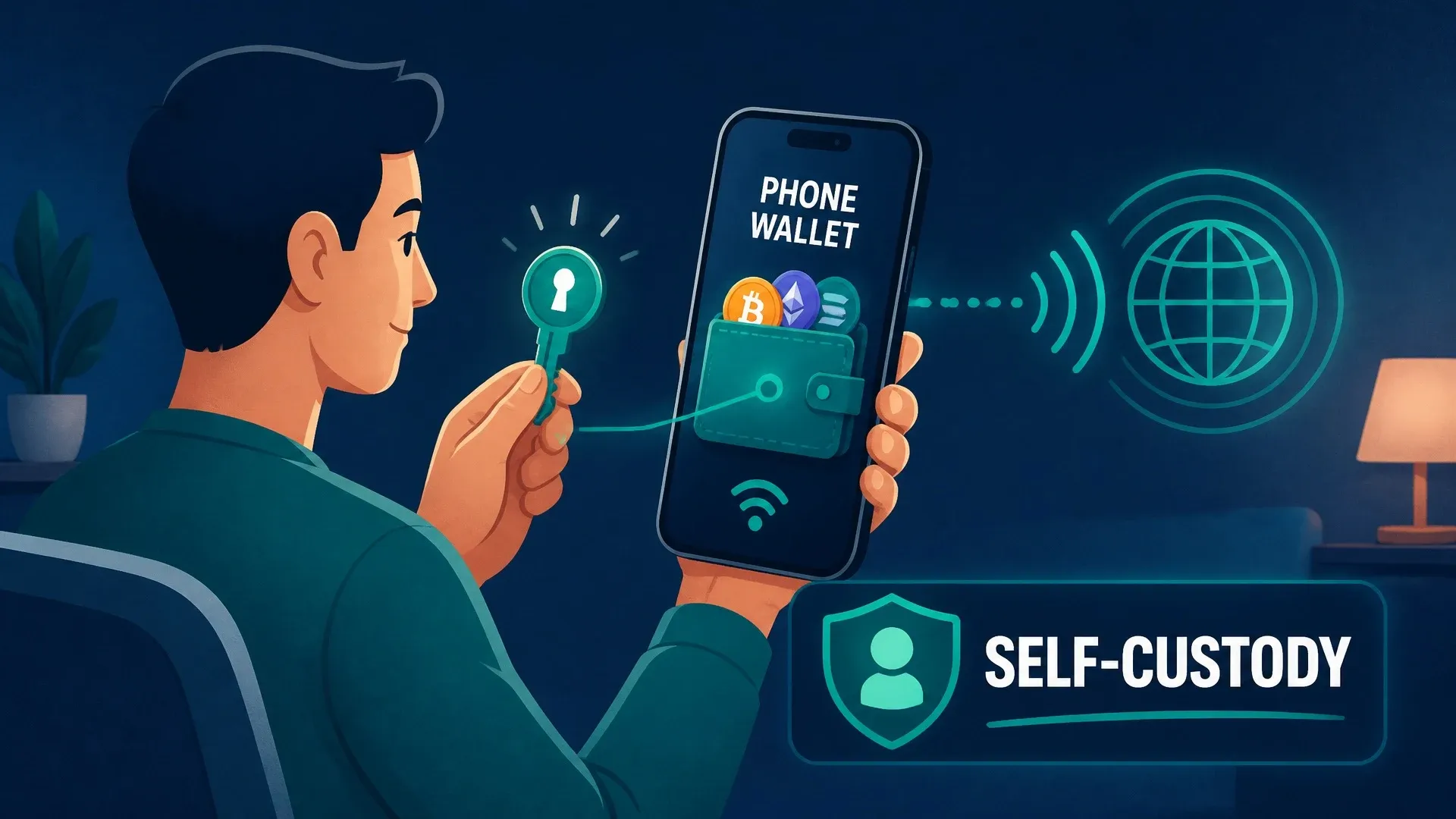
A phone wallet can be self-custodial and hot at the same time because the two labels describe different properties.
A company can hold customer assets in cold storage and remain the custodian. An individual can control a mobile wallet and remain in self-custody. “Who controls the keys?” and “How exposed are the keys?” need separate answers.
Risk moves; it does not disappear
“Not your keys, not your coins” captures the cryptographic distinction but compresses the legal and practical ones. A custodial customer may have a contractual claim despite lacking the keys. A self-custody user may have direct control while relying on unsafe backups and untrustworthy software.
Multisignature wallets can require several keys. Smart accounts can add limits, backup mechanisms, or social recovery. These designs reduce some single points of failure while adding software, coordination, and governance risk.
Many users combine models: a small working balance with a custodian and longer-term assets under another arrangement. The right choice depends on which failure can be handled. With custody, investigate withdrawals, fees, commingling, platform failure, and legal terms. With self-custody, test recovery safely, protect secrets, verify transactions, and maintain access without exposing it.
Control means the ability to authorize the blockchain transaction. Custody places that ability with an organization that promises to follow instructions. Self-custody places it with the user—and places the consequences there too.