Short answer
The answer in plain English
Federal Reserve rate-cut forecasts move because neither Fed projections nor economists' estimates are promises. The policy path depends on incoming inflation, employment, growth, and financial conditions. When inflation remains above target, demand stays resilient, or supply shocks threaten new price pressure, cutting becomes harder to justify. A sustained weakening in inflation or employment can bring cuts back into view.
Why it matters
What to understand
The federal funds rate influences short-term financial conditions but does not map one-for-one onto mortgages or every savings account. One soft data release can change market probabilities without establishing a durable trend. Higher-for-longer can support cash yields while hurting variable-rate borrowers and some bond prices. Personal plans should work under today's rates rather than depend on one forecasted meeting date.
Visual guide
How the pieces fit together


Forecasts move because the economy moves
A predicted rate-cut month is not an appointment. It is shorthand for a scenario: if inflation, employment, and growth develop roughly as expected, the Federal Reserve may judge lower rates appropriate. Change the economic path and the forecast must change too.
The federal funds target is the overnight rate for bank reserves. Consumers do not borrow at that exact rate, but it influences short-term Treasury yields, savings accounts, credit cards, business lending, and broader financial conditions. The Fed uses it while pursuing price stability and maximum employment.
Cutting is easier to justify when inflation is cooling and employment is weakening. It is harder when inflation remains high and demand is resilient. A supply shock can make the choice worse by raising prices while slowing growth.
The projections are conditional, not contractual
In June 2026, Fed officials’ median projections showed a higher year-end policy path and higher inflation than they had expected in March. That did not mean a previously promised cut had been cancelled. The assumptions changed, so the projected response changed.
This is why the “dot plot” is often misunderstood. Each point reflects one participant’s view under an expected economic path. It is not a committee vote on a future meeting, and the participants themselves revise the path as data arrives.
Inflation has several measures and time horizons. A calm month in the Consumer Price Index can coexist with year-over-year inflation above target or firmer pressure elsewhere. The Fed’s preferred PCE measure can tell a somewhat different story. Officials also care about whether price changes are broad and persistent.
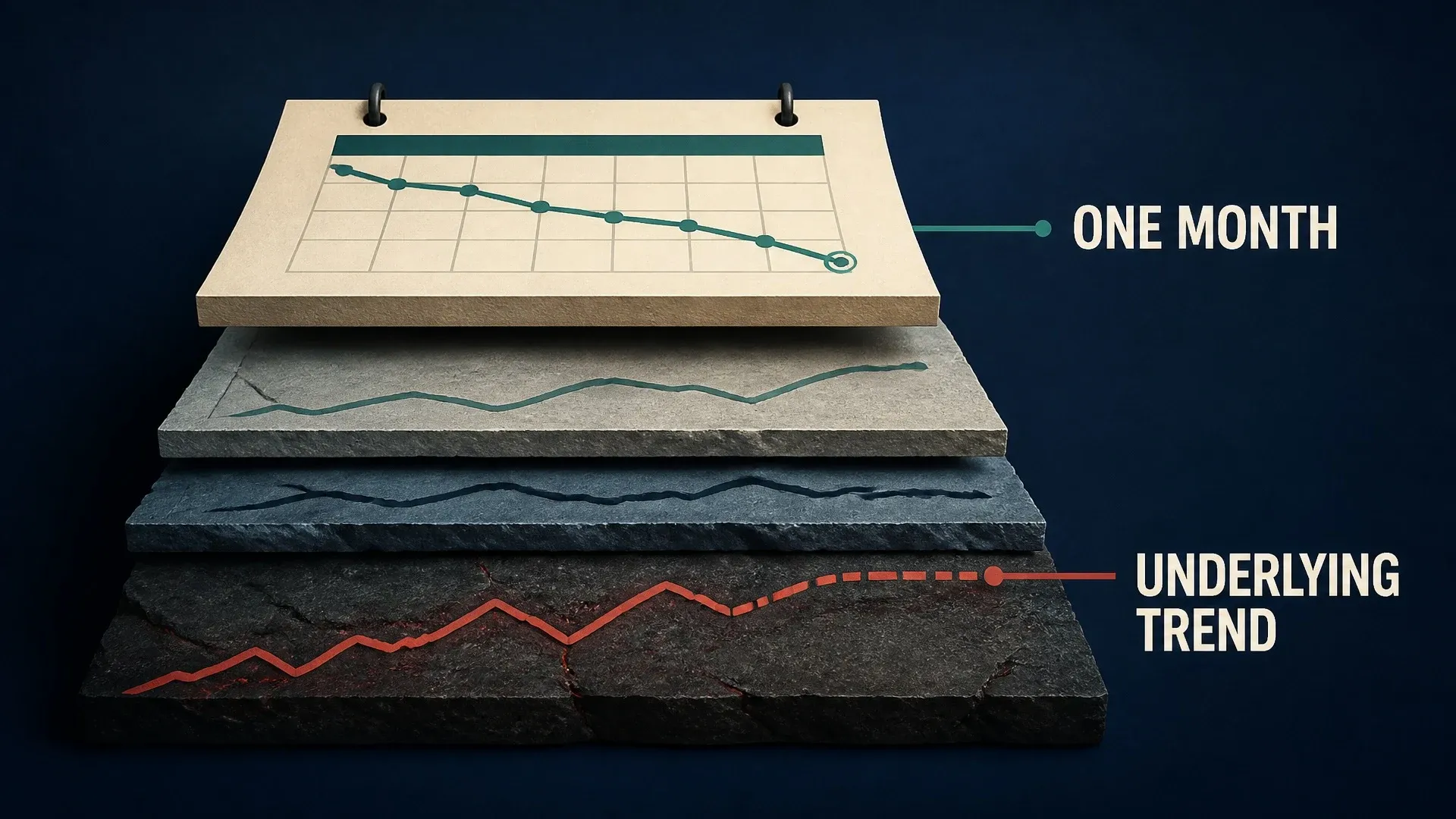
One favorable monthly report can change probabilities without proving that the underlying inflation trend is solved.
Monetary policy operates with delays. A decision affects borrowing, spending, hiring, and investment over months. The Fed is therefore judging both current inflation and where it may be after today’s restraint or stimulus has worked through the economy.
Jobs data can point in the opposite direction
A weakening labor market strengthens the argument for cuts, but one payroll report contains noise and may be revised. Officials must decide whether it marks a persistent deterioration or a temporary fluctuation.
Markets update probabilities after every inflation release, employment report, and policy speech. That movement is not evidence that traders have discovered a secret decision. It is the normal repricing of several possible futures.
At its July 2026 meeting, the Fed kept the target range at 3.5% to 3.75%. Three policymakers preferred a quarter-point increase. That did not guarantee a hike, but it showed how far the debate had moved from earlier assumptions that cuts were automatic.
Higher for longer has winners and losers
Savers may receive competitive yields for longer, although banks set their own rates and can change them before the Fed acts. At a simple 4%, $10,000 earns about $400 over a year before tax; at 3%, it earns about $300. Shopping among insured accounts can matter more than waiting for one meeting.
Bond investors face the inverse relationship between market yields and existing fixed-rate bond prices. If new comparable bonds pay more, an older low-coupon bond must trade at a lower price to compete. Longer maturities are generally more sensitive. Holding an individual high-quality bond to maturity differs from selling early, while a bond fund continuously replaces securities and remains exposed to current yields.
Borrowers feel short-term rates through credit cards and variable-rate loans. Existing fixed-rate mortgages do not change with a Fed decision. New mortgage rates depend heavily on longer-term Treasury yields, inflation expectations, and lender spreads.
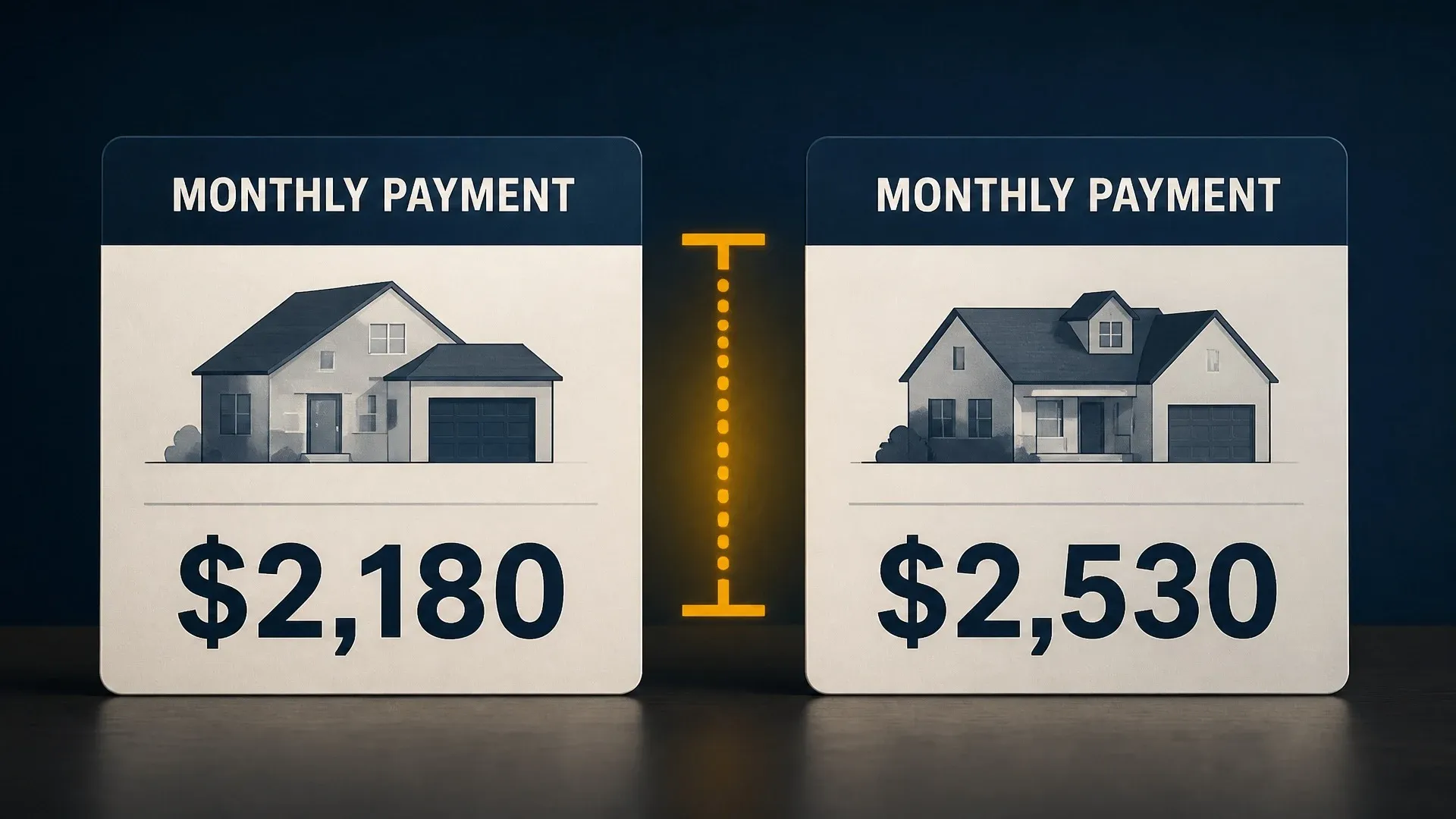
Small rate changes can materially alter a mortgage payment, but mortgage rates do not follow Fed decisions one-for-one.
A half-point difference on a large loan can change the monthly payment substantially. Waiting still has costs: rent continues, home prices may move, and the expected rate may not arrive. A purchase or refinance should work under current numbers before a future cut is treated as upside.
Cuts are not automatically good news
The Fed can cut because inflation cooled without serious damage. It can also cut because unemployment is rising rapidly or financial stress is spreading. Cheaper money does not instantly offset job losses, falling profits, or weak demand.
The clearest route back to cuts would be several months of convincing inflation progress, calmer underlying price pressure, and enough cooling in employment and demand to reduce overheating risk. A sharp labor-market decline could also produce cuts for a much less comfortable reason. Renewed inflation, strong spending, or broad supply-shock effects would push the other way.

A sustained pattern of inflation and employment evidence matters more for policy than one encouraging report.
A forecast can still help with scenarios. It should not become the only condition under which a personal plan works. Keep cash in an account with competitive current terms, understand duration risk in bonds, test major borrowing at today’s rate, and calculate refinance break-even costs when an actual offer exists. The next predicted cut date is an estimate, not a deadline.