Short answer
The answer in plain English
Tether’s first full financial-statement audit provides substantially stronger independent evidence that Tether International’s 2025 accounts were fairly presented in all material respects. It broadens scrutiny beyond a quarterly reserve snapshot. It does not guarantee that USDT will always trade at one dollar, that every holder can redeem directly and instantly, or that banks, custodians, markets, wallets, and counterparties cannot fail later.
Why it matters
What to understand
The unqualified KPMG opinion is meaningful evidence, not a promise that every future USDT redemption will be frictionless. An audit evaluates historical financial statements using testing, judgment, materiality, and independent evidence. Users still need to distinguish asset coverage from ready cash, issuer redemption from exchange trading, and Tether’s accounts from the risks of the platforms and wallets through which they hold USDT.
Visual guide
How the pieces fit together


The audit is evidence, not a permanent guarantee
Tether’s first full audit changes the quality of the public evidence around USDT. According to Tether’s announcement, KPMG U.S. audited Tether International’s financial statements for the year ended December 31, 2025 and issued an unqualified opinion.
That is materially broader than checking a reserve figure on one date. It is also narrower than some of the headlines it can inspire. The opinion concerns the fair presentation of a named company’s historical financial statements in all material respects. It is not a live guarantee for every token, exchange, bank, custodian, or wallet.
The useful question is therefore not whether the audit is “proof” or “meaningless.” It is what kind of proof it provides.
USDT moves on-chain; its backing does not
USDT exists on several blockchains. Those networks record token balances and transfers, but they do not manufacture the dollars, Treasury bills, gold, or other assets reported as reserves.
In a simplified issuance, an eligible customer sends funds to Tether and receives newly issued USDT. Later on-chain transfers move the tokens between addresses while the reserve portfolio remains under the issuer’s control. Redemption reverses that relationship: an eligible customer returns tokens to Tether and receives fiat through the banking system, subject to verification and the published fee and minimum rules.
Most small holders instead buy or sell through exchanges. That creates two related prices: the market price formed by buyers and sellers, and the issuer redemption value available to approved direct customers. Arbitrage can pull the market price back toward one dollar, but only while trading venues, banking access, confidence, and redemption operations continue working.
A reserve attestation is not a full audit
Tether has long published reports on its transparency page. A reserve attestation examines specified information against specified criteria, usually at a reporting date. It can provide outside assurance about the reported reserve position without becoming an audit of the full annual financial statements.
A financial-statement audit covers a broader set of statements, records, transactions, estimates, and disclosures across a period. The AICPA & CIMA’s private-company audit explainer describes the auditor’s objective as obtaining reasonable assurance that the statements are free from material misstatement.
“Reasonable” matters. Auditors use risk assessment, materiality, judgment, testing, confirmations, and sampling. An unqualified opinion does not mean that every transaction was checked or that no minor error existed. It means the auditor concluded the statements were fairly presented, in all material respects, under the stated accounting framework.
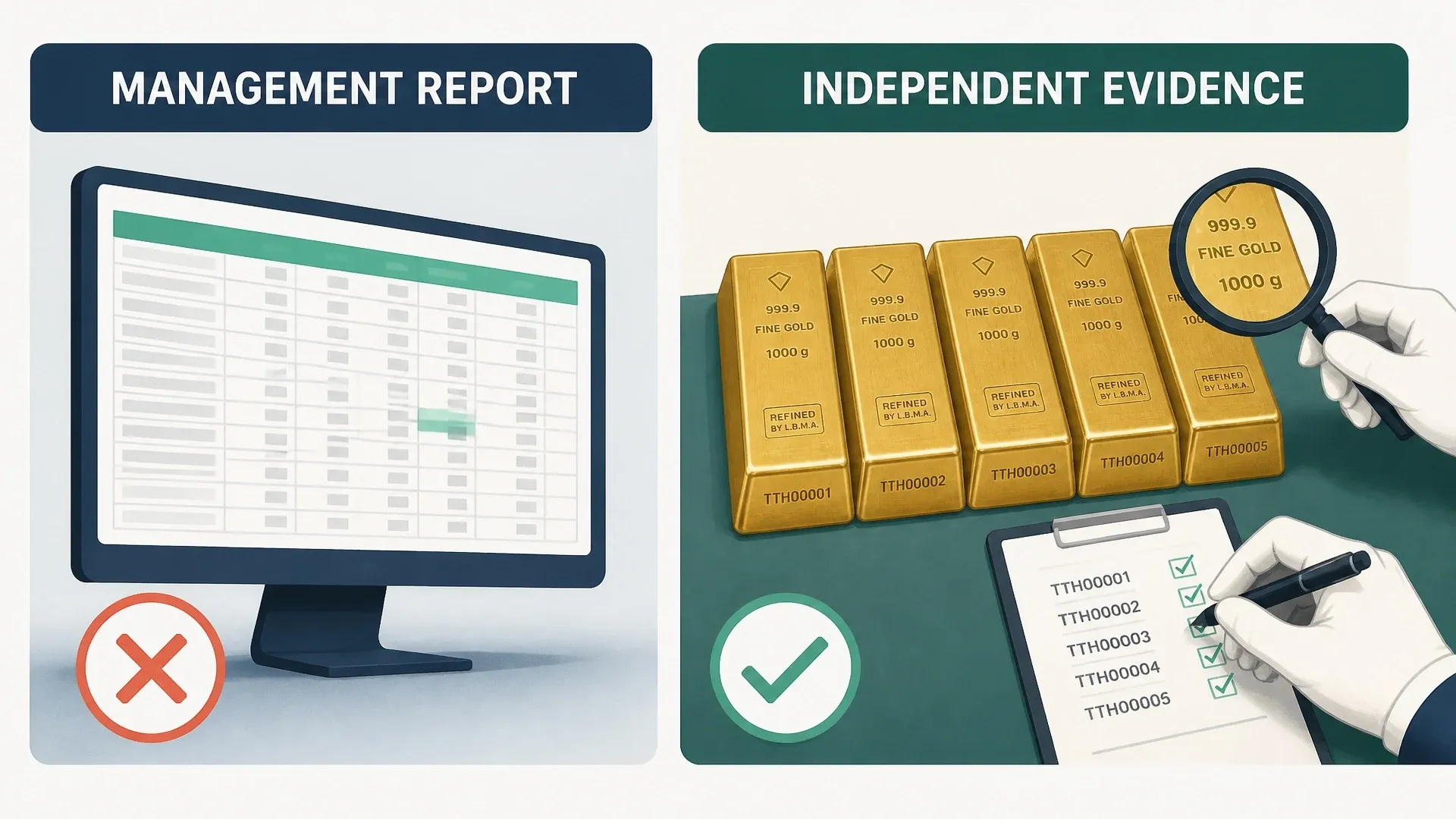
Tether says KPMG examined evidence involving transactions, ownership records, valuations, counterparties, and systems, and physically counted and inspected gold bars. That is more than accepting a spreadsheet supplied by management. It still does not amount to a separate guarantee that every internal control is effective or that gold will always retain its price and remain instantly accessible.
The reserve cushion addresses solvency, not every redemption problem
The audited statements reportedly showed assets exceeding liabilities by $6.814 billion at the end of 2025. That difference is an accounting cushion: some losses or valuation changes could occur before reported assets fell below reported liabilities.
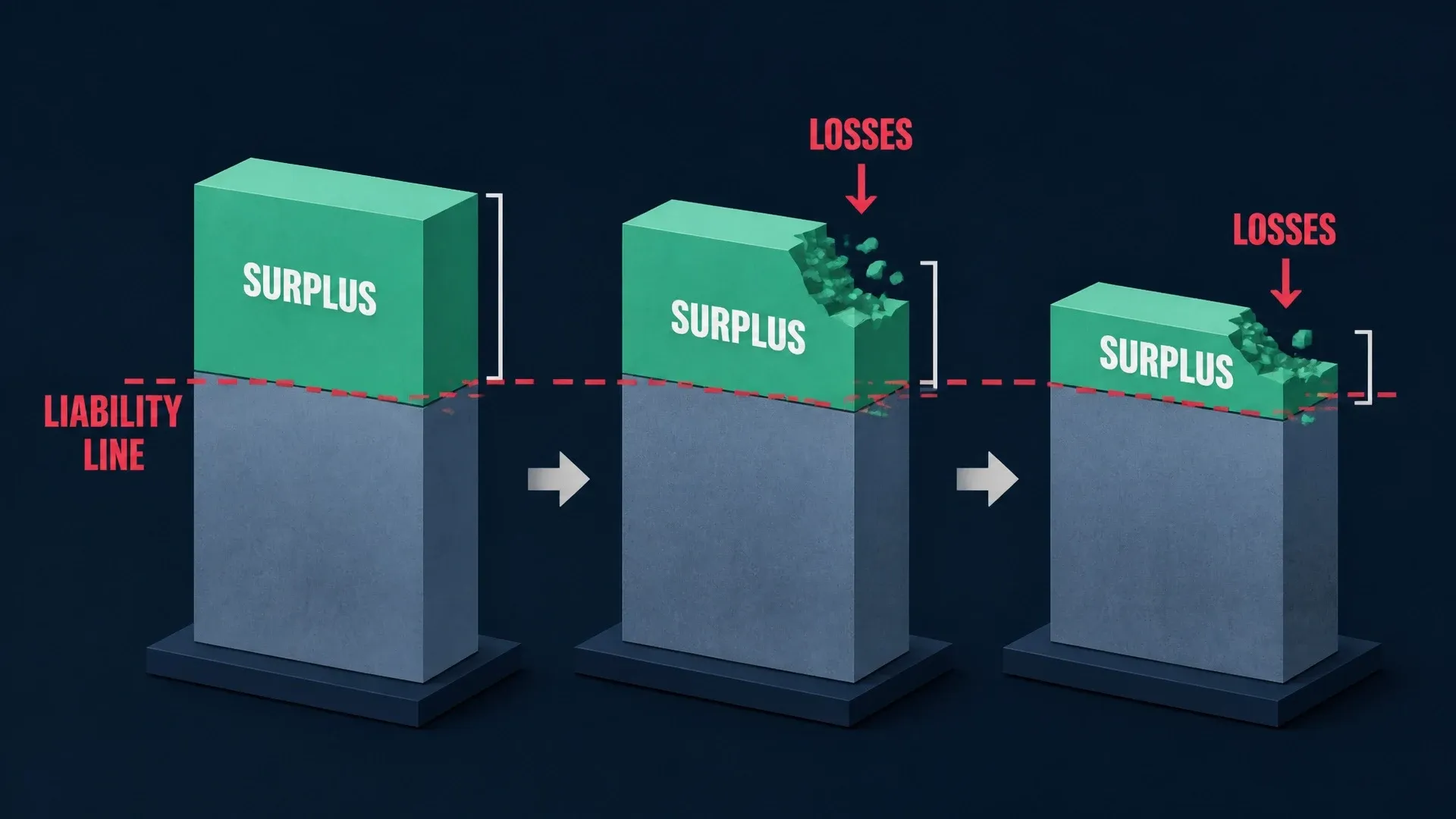
It is not necessarily a separate emergency cash account. Its practical value depends on what the assets are, how their values move, and how quickly they can be sold or settled. The company’s Relevant Information Document is one place to examine issuer-provided information about the product and its risks.
This leads to the central distinction.
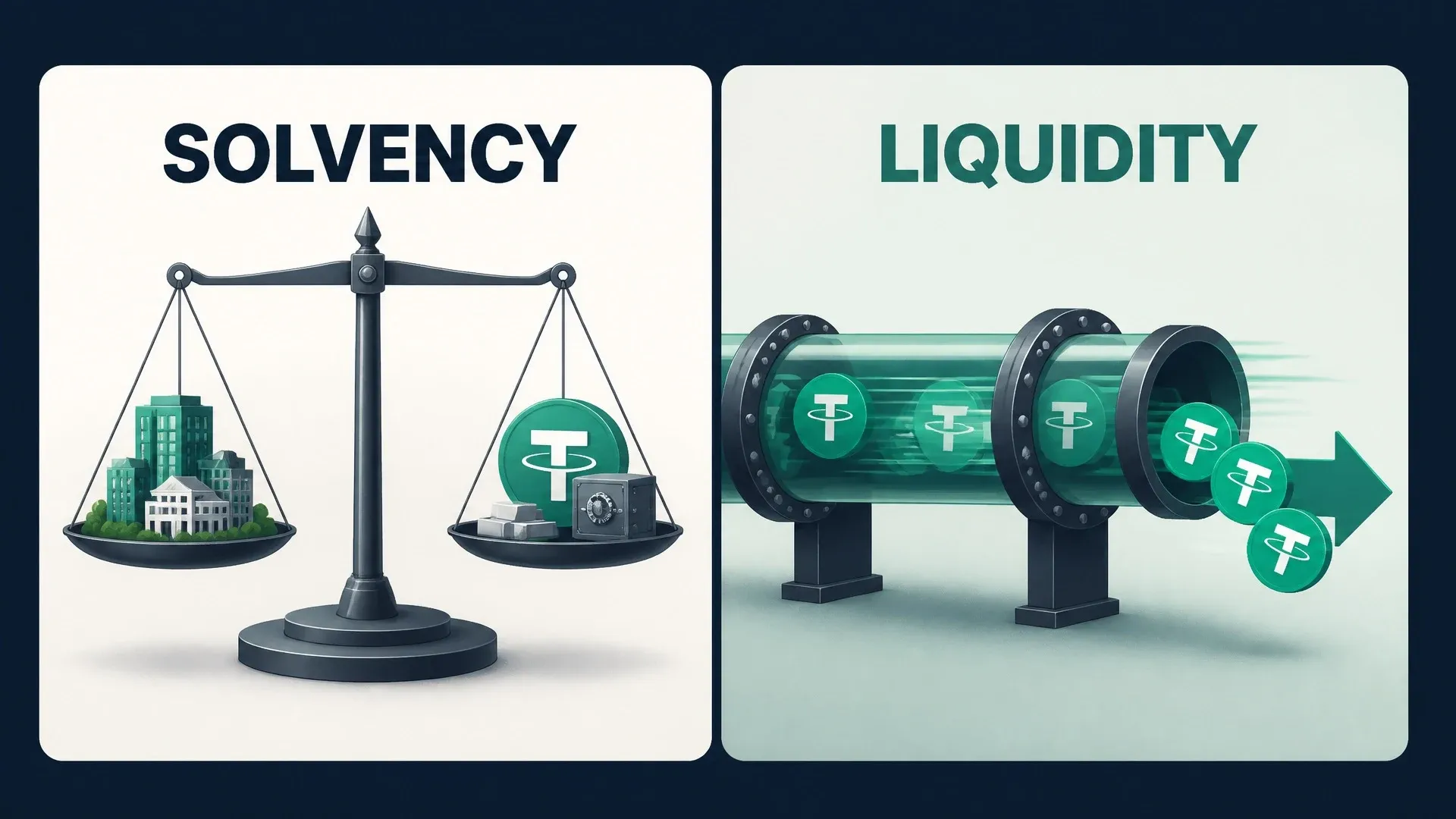
Solvency asks whether assets are worth more than liabilities. Liquidity asks whether enough assets can become usable dollars quickly enough to meet redemptions. A portfolio can be solvent on paper and still face short-term friction if markets seize up, banks restrict access, custodians fail, or assets must be sold at a discount.
What the opinion cannot remove
A clean audit of Tether International does not audit every exchange where USDT trades. It cannot prevent an exchange failure, a malicious wallet signature, a lost private key, a transfer over the wrong network, or a future regulatory restriction. Controlling keys with a hardware wallet solves only one part of the custody problem.
It also cannot remove issuer and counterparty risk. Tether controls issuance and redemption and can freeze tokens in defined circumstances. Banks, custodians, borrowers, and trading venues remain separate points of failure. A contemporaneous report from Cointelegraph describes the audit result, but no news report or audit opinion converts historical evidence into a promise about tomorrow.
Reporting dates still matter
The opinion covers the year ended December 31, 2025. Token supply, asset values, counterparties, liabilities, and banking relationships continue changing after that date. Future disclosures and repeated audits will show whether the stronger standard becomes a durable reporting practice.
The balanced conclusion is straightforward: the audit answers a major transparency criticism with significantly stronger independent evidence. It supports the reported 2025 financial picture. It does not make USDT risk-free, guarantee one-dollar market pricing, or turn a centralized redemption promise into an automatic property of the blockchain.

