Short answer
The answer in plain English
Name a real weakness that is not central to the job, explain how it affected your work, describe the specific system you now use to manage it, and finish with recent evidence that the system is helping. Avoid fake strengths, fatal weaknesses, and honest problems with no containment plan.
Why it matters
What to understand
The question tests self-awareness and responsible improvement, not whether you can disguise a strength as a flaw. Choose the weakness in the context of the role, make the downside concrete, explain the checklist, feedback loop, practice routine, or other behavior that contains it, and give one recent example of progress.
Visual guide
How the pieces fit together


Use honesty with a containment plan
The safest answer is not “I’m a perfectionist,” and it is not a dramatic confession. Give a real weakness that is not essential to the job, explain the system you use to manage it, and finish with evidence that the system is working.
That structure sounds honest without asking the interviewer to ignore an uncontrolled risk.
The question is not necessarily a demand to reveal what is “wrong” with you. In a structured interview, candidates may be evaluated against consistent, job-related criteria. The U.S. Office of Personnel Management’s structured-interview guidance explains why comparable questions and rating standards matter. A useful answer shows whether you can recognize a limitation, take responsibility, and change your behavior.
1. Choose a weakness that is real but not fatal
Start with the job description. Identify the three or four abilities that are central to the role, then protect them.
An accountant should not volunteer that they routinely miss numerical errors. A salesperson should not say they avoid talking to new people. A manager should be cautious about admitting that they cannot give feedback. Those answers attack the reason the employer would hire them.
Look outside that core. A software developer whose work is mostly individual and technical might discuss presenting to large nontechnical audiences. A graphic designer might discuss estimating unfamiliar projects. A first-time supervisor might discuss learning to delegate routine decisions.
Context decides whether an answer is safe. Public speaking could be manageable in one technical role and central to a training role. Ask: “If this weakness continues to some degree, can I still perform the main job well?” If not, choose another example.
2. Explain the real effect on your work
A personality label is too vague. “I can be disorganized” invites the interviewer to imagine every possible failure. Describe the behavior and its cost instead.
“Earlier in my career, I kept project details in too many places, which made smaller follow-ups harder to track” is specific. So is: “I used to polish an analysis for too long before checking whether I was answering the right business question.”
The effect makes the weakness credible. It also creates a clear target for improvement. Keep it proportionate: one example is enough. This is an interview response, not a complete list of mistakes.
3. Show the system that contains the risk
A real weakness without a system sounds like an ongoing problem. “I’m working on it” describes an intention, not a behavior.
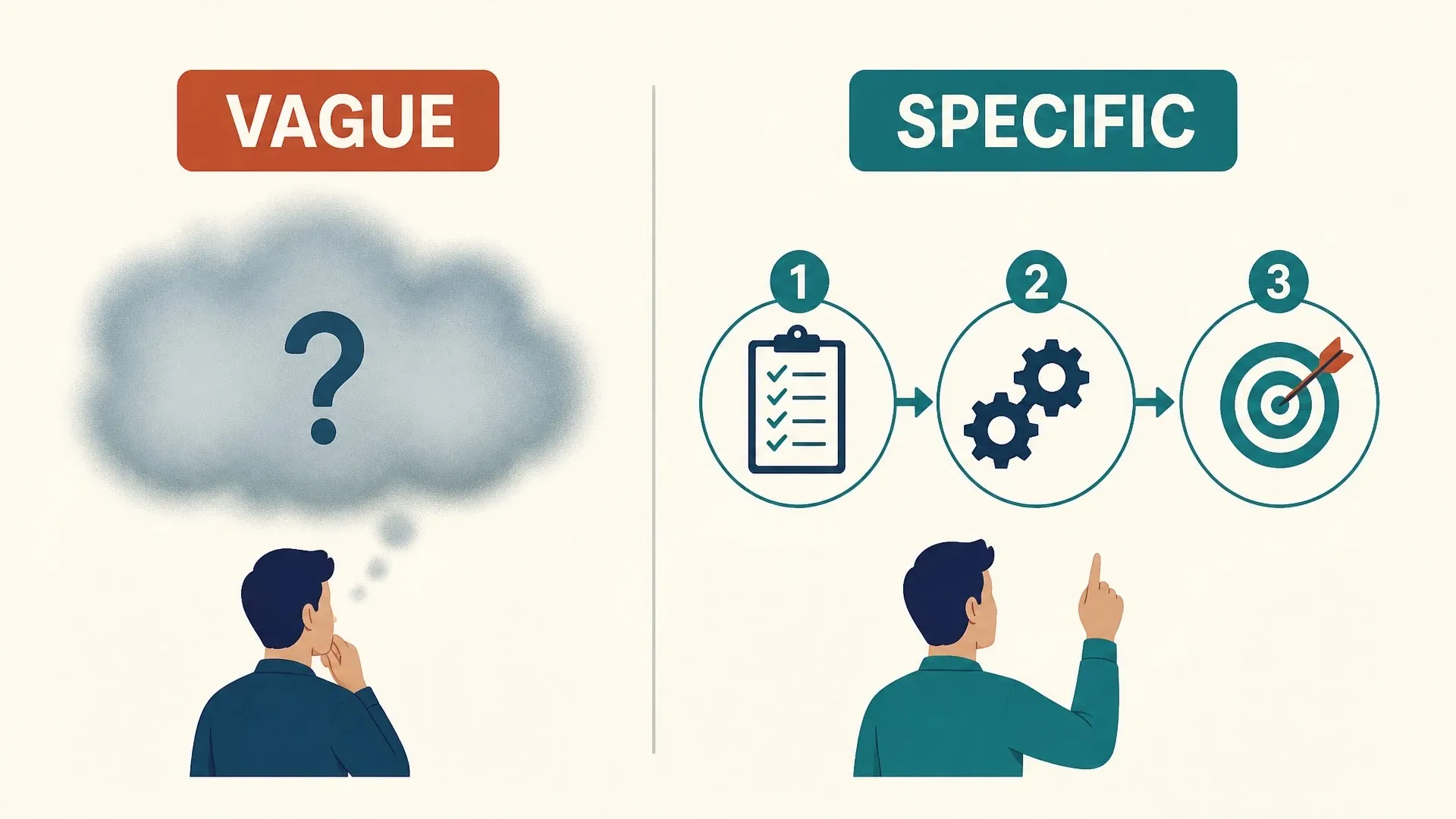
A containment system might be a checklist, calendar block, template, review step, practice routine, feedback meeting, time limit, or escalation rule. The important test is whether another person can understand what you now do differently.
For small follow-ups, an answer might be: “I capture every commitment in one task list during the meeting, assign a due date before moving on, and review the list at the beginning and end of each day.” The person did not claim to develop a perfect memory. They made memory less important.
For over-polishing early work: “I now schedule a short review after the initial approach and first findings, before I refine the final output.” That creates a checkpoint where feedback is still cheap.
4. Give recent evidence of progress
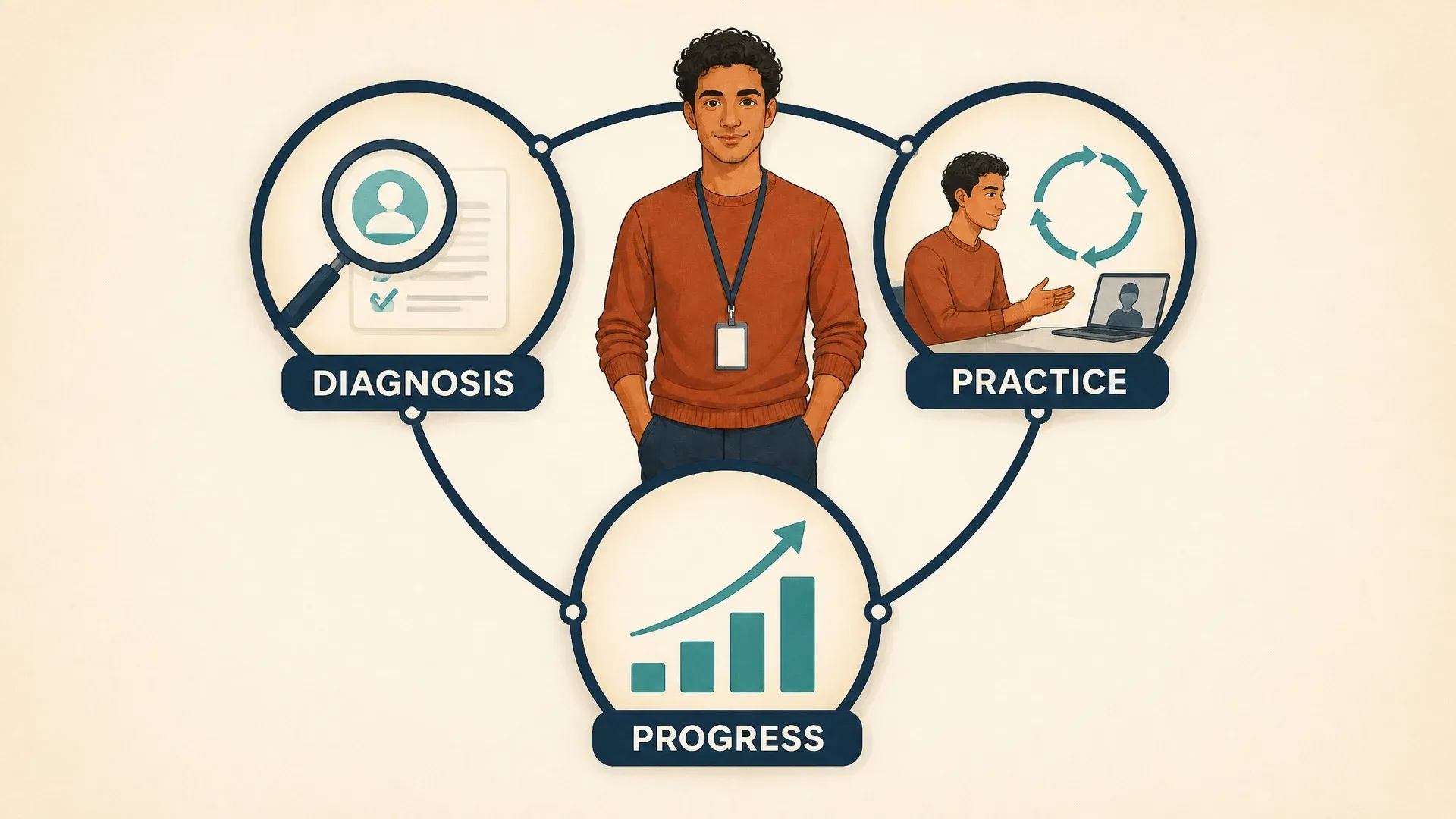
Evidence does not need to be a dramatic percentage. It can be a project delivered as agreed, clearer questions after a presentation, feedback from a manager, or one situation where the new process prevented the old mistake.
A data analyst might say: “On my most recent project, the early review exposed a different stakeholder priority, and I changed the analysis before spending time on the final report.” Someone working on presentations might explain that rehearsing with a colleague outside their specialty exposed jargon and led to more focused audience questions.
Career guides from Harvard, Yale, and Penn all provide interview-preparation context. The practical common ground is preparation with real examples, not memorizing a performance that collapses under follow-up.
Put the four moves into one answer
Use this adaptable structure:
- Name the area: “One area I’ve been improving is…”
- Explain the effect: “I noticed it was affecting…”
- Describe the system: “To manage that, I now…”
- Give evidence: “Recently…, which showed the approach is helping.”
Here is a complete example:
“One area I’ve been improving is sharing early analytical work sooner. I used to spend too long refining the output before confirming that I was answering the right question. I now schedule a short review after the approach and first findings. On my latest project, that review uncovered a different stakeholder priority, so I adjusted before building the final report.”
The answer names a genuine cost, gives a reproducible action, and stops short of claiming the weakness vanished.
Avoid three unsafe answers
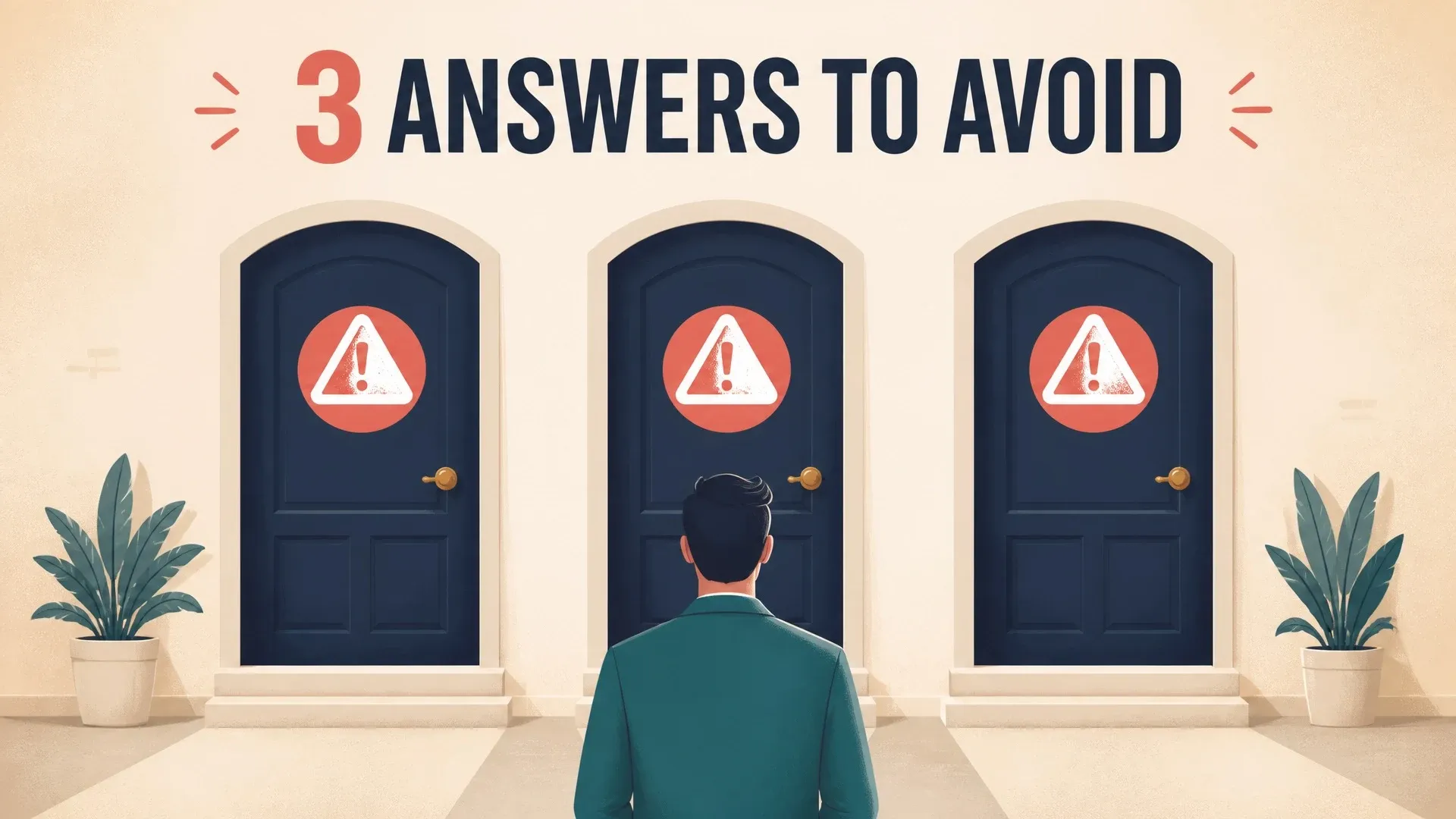
The first unsafe answer is the fake strength: “I work too hard” or “I care too much” without a real downside and corrective action. The second is the fatal weakness, directly tied to the role’s essential responsibilities. The third is the uncontained weakness: a genuine problem followed only by “but I always get it done eventually.”
Prepare for a follow-up about when the issue last appeared, who gave feedback, or what remains difficult. Do not invent a perfect ending. “I’m more consistent now, although I still use the checklist because it prevents me slipping into the old habit” can make the answer stronger.
Practice two possible examples aloud, but remember the four moves rather than every word. As with explaining your work experience, specific evidence is more trustworthy than polished adjectives.
The goal is not to turn a weakness into a hidden superpower. It is to show that you can see your behavior clearly and manage it responsibly.

